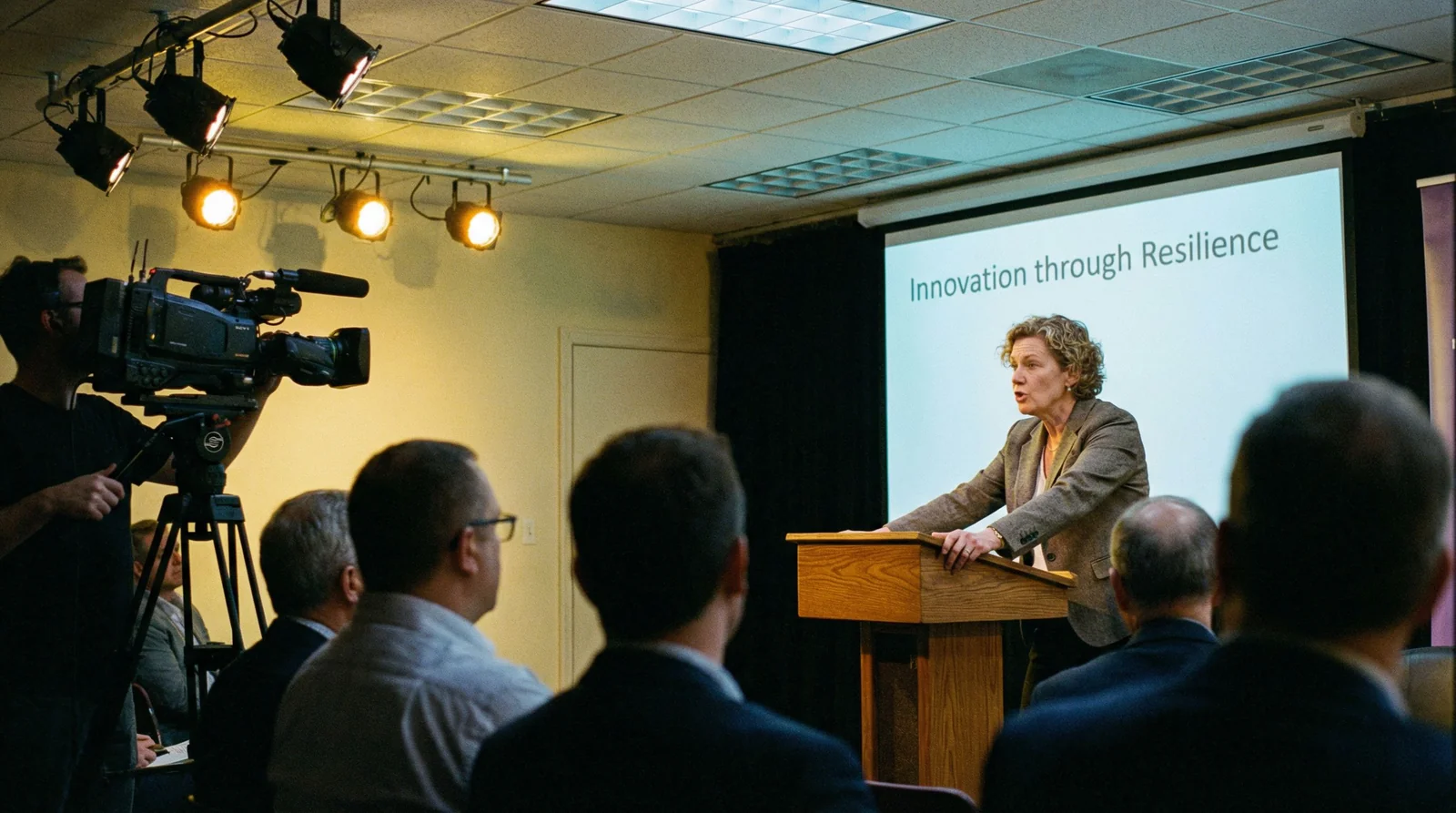
Why Thought Leadership Starts with Spoken Expertise
The best leadership blogs don't begin as writing. They begin as someone talking through what they know. Spoken expertise carries specificity, conviction, and natural rhythm that blank-page writing rarely matches. Here is why starting from voice changes the quality of everything you publish.

Hunter Lee Canning
Founder & CCO

The Blank Page Problem in Thought Leadership
Here is what happens when you ask a subject-matter expert to write a blog post. They open a document. They stare at it. They write a sentence, delete it, write another one. Forty-five minutes later, they've two paragraphs that sound nothing like how they think or talk. The ideas are flattened. The voice is gone. What remains is cautious, corporate-sounding prose that could have been written by anyone.
This isn't a writing skills problem. These are people who can hold a room for an hour on their topic. They explain complex ideas with precision and energy when they're talking to a colleague, a client, or a room full of prospects. The knowledge is there. The conviction is there. The blank page just kills it.
Writing from scratch forces a translation step that strips out what makes expertise compelling. Gone. The natural examples disappear. The specific language gets replaced with safe generalities. The pacing flattens into uniform paragraph blocks. And the person's actual point of view, the thing that would make the piece worth reading, gets buried under hedging and qualifications.
The result is content that checks the box but doesn't build trust, doesn't differentiate, and doesn't sound like a real person with real opinions. It sounds like content. Your audience can tell the difference in about three seconds. That is the gap.
What Changes When You Start from Voice
Ask that same expert to talk through their perspective in a conversation and something fundamentally different happens. They lean in. They use the language they use with clients. They reach for the specific example instead of the general claim. They say things like "here is what I keep seeing" and "the mistake people make is" and "let me tell you what happened with a client last quarter." The content becomes grounded in lived experience rather than abstract positioning.
Spoken expertise carries three qualities that blank-page writing almost never produces on its own.
First, specificity. When people talk, they reach for concrete details because they need to make their point land in real time. No room for vagueness. A written draft might say "companies often struggle with content consistency." The same person speaking will say "we had a client producing four blog posts a month and none of them sounded like they came from the same company." The spoken version is more useful, more credible, and more interesting.
Second, conviction. Written drafts tend toward qualification. People hedge because the permanence of text makes them cautious. In conversation, they commit to their positions because that's how conversation works. You state what you believe and then you explain why. That directness is exactly what B2B thought leadership needs to function. No hedging. Just the point.
Third, natural rhythm. People speak in varied sentence lengths. They pause for emphasis. They use fragments. They build to a point and then land it cleanly. Written drafts from non-writers tend toward uniform sentence structure and paragraph length. Spoken language has built-in musicality that makes the final piece more readable, even after editing. The content strategy writes itself when the raw material already has shape.
Transcript to Blog Isn't Transcription
A common misunderstanding about this approach is that it means publishing a cleaned-up transcript. It doesn't. A transcript is raw material, not a finished product. The work of turning spoken expertise into a published blog involves real editorial judgment: identifying the strongest thread, cutting the tangents, restructuring for a reading experience, tightening the language without losing the voice.
The point isn't that the transcript is the blog. The point is that the transcript gives you something a blank page never will: a foundation of authentic content to work from. Real thinking. Real language. The editorial process shapes and refines. It doesn't have to generate from nothing.
This distinction matters because the quality ceiling is different. When a writer starts from a blank page and a brief, the best case is a competent article that covers the topic. When an editor starts from a transcript of a genuine expert working through their thinking out loud, the best case is a piece that sounds like no one else in the market could have written it. Because no one else could have. It came from a specific person's specific experience.
The editing process also preserves things that writers working from briefs tend to miss. Worth noting. The unexpected analogy someone reaches for in conversation. The moment where they push back on a common assumption. The way they frame a problem that reveals how deeply they understand it. These are the elements that separate thought leadership from content marketing. They exist in the spoken version. They almost never survive the blank-page translation.
Why This Matters for Trust and Search
Google's emphasis on E-E-A-T (experience, expertise, authoritativeness, trustworthiness) rewards content that demonstrates firsthand experience. A blog post built from a recorded conversation with a subject-matter expert is, by construction, experience-based content. It isn't research compiled from other sources. It isn't a rewrite of existing articles on the same topic. It is original thinking from someone who does the work. That is the standard now.
The difference shows up in how the content reads, and search algorithms are getting better at detecting that difference. Content that sounds like it was generated from a keyword brief reads differently than content that sounds like it came from a person who has spent years in the problem space. The spoken-first approach produces the second kind consistently.
There is a compounding effect as well. When every blog on your site comes from recorded leadership conversations, the entire library reads as authoritative. Visitors who land on one post and click through to another encounter the same depth and specificity throughout. The site becomes a body of work rather than a collection of keyword-targeted articles. Here is what we see: that distinction changes how prospects perceive the company behind it.
Trust is the entire game in thought leadership. A prospect reading your blog is making a judgment: does this person know what they're talking about, or are they just filling space? Content that starts from spoken expertise passes that test because it carries the markers of real knowledge. Specific examples. Clear positions. The kind of granular detail that only comes from direct experience. Authentic content wins this test every time.
Making Voice-First Content Your Default
Shifting to a voice-first content model isn't complicated, but it does require a commitment to doing the recording consistently. One structured conversation per month with the right person on the right topic is enough to produce a blog post that carries genuine authority. The recording is the hard part only in the sense that it requires scheduling. The thinking is already happening inside your team every day. You're just capturing it.
The team members who should be recorded aren't always the ones you would expect. It isn't only the CEO. It is whoever has the deepest expertise on the topic that matters most to your buyers right now. Sometimes that's a department head. Sometimes it's a senior practitioner. The goal is to capture the person whose knowledge and perspective your prospects would pay to sit in a room with.
If you want to see how this connects to a broader content strategy, read Why Consistent Content Beats Polished One-Offs. For the case that unrehearsed, natural delivery outperforms polished scripts, see Why Unrehearsed Leadership Content Builds More Trust. And if you're thinking about how blog and video formats reinforce each other when they share the same source material, How Blogs and Videos Should Work Together in Your Content System covers that in detail.
When you're ready to record your first conversation and see what it produces, book a session with us at https://booking.plumwheel.com/. We'll handle the structure, the recording, and the editorial work. You bring the expertise.