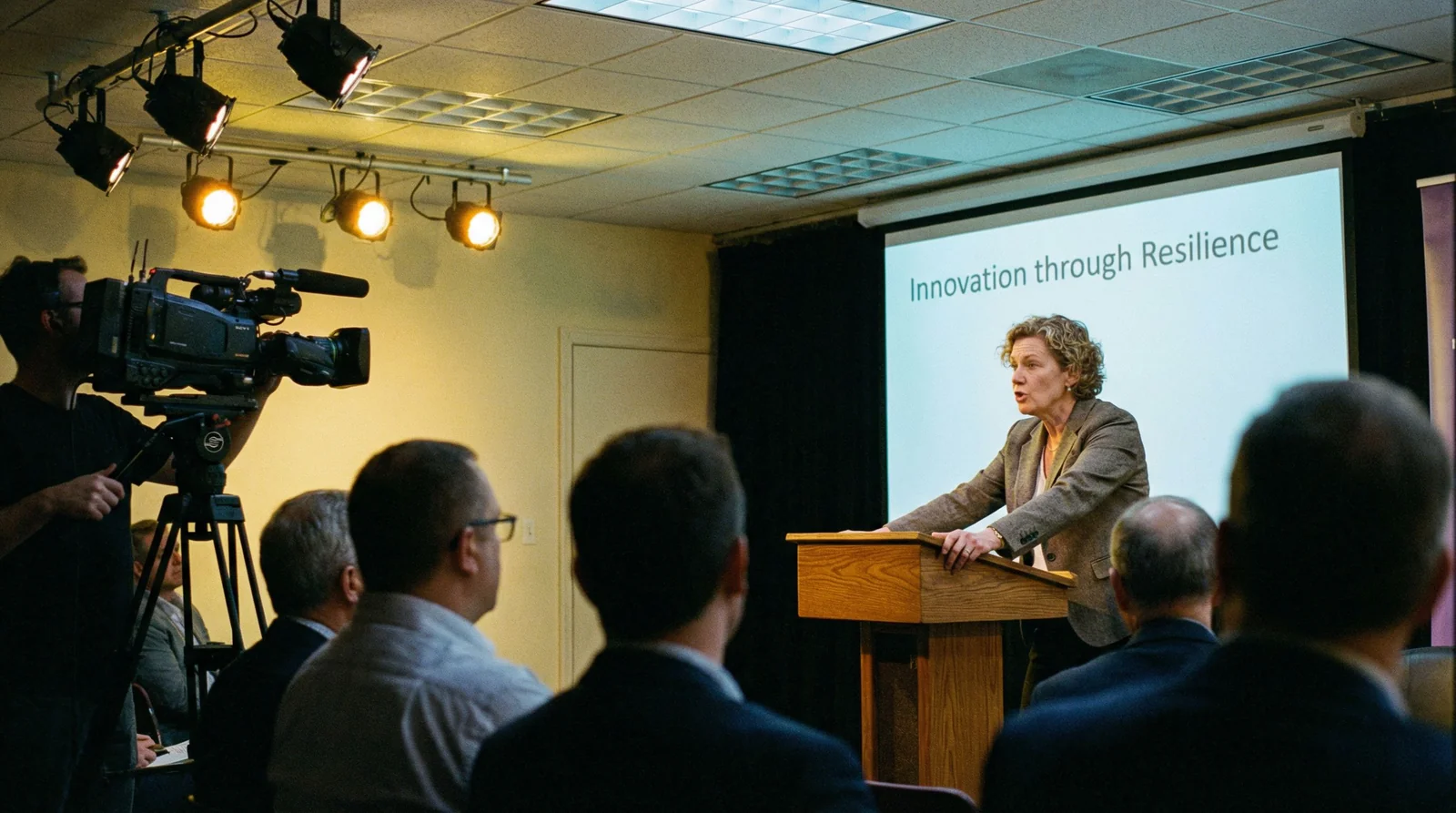
How One 90-Minute Conversation Becomes a Month of Content
A single recorded leadership conversation generates video clips, blog posts, social content, and email campaigns. Nothing is wasted. The system is designed so every conversation feeds the content machine for weeks. Here is exactly how that works.

Hunter Lee Canning
Founder & CCO

Why Most Content Systems Run Out of Steam
Most content strategies fail not because the strategy is wrong but because the production model is unsustainable. Someone has to write the blog posts. Someone has to script the videos. Someone has to develop the social content. Someone has to write the email. And usually one or two people are producing each piece from scratch, week after week.
The workload compounds quickly. A consistent content schedule across even three or four platforms requires a volume of output that's genuinely difficult to maintain without dedicated creative resources. Most leadership teams don't have those resources, and the ones that do often find that the output still lacks coherence. Blog posts are written in one voice, social content in another, email campaigns in a third. The brand feels scattered even when the individual pieces are strong.
The root of the problem is treating content creation as a continuous production task rather than as a processing task. If you start from scratch every week, you'll always be behind and the content will always feel episodic. If you start from a single rich source and process it into multiple formats, the workflow becomes manageable and the content stays consistent because it all comes from the same conversation.
This is the shift at the center of how we work with clients at Plumwheel. One recorded conversation isn't the beginning of one piece of content. It is the beginning of a month's worth of content, derived from the same source, carrying the same voice, shaped for different platforms and different moments in the buyer's journey.
What Happens in a Single Recorded Leadership Conversation
The raw material is a recorded leadership conversation, typically ninety minutes, structured around a topic the team has real opinions about. It might be a challenge that keeps coming up in client work. It might be a shift in how the company thinks about a specific part of their process. It might be a tension between two approaches that the team has been working through.
The conversation isn't scripted and it isn't a formal interview. It is a real discussion between people who know the subject. That realness is the whole point. When your head of sales and your CEO are genuinely working through a question together on camera, what you capture isn't a performance. It is authentic thinking, the kind that builds trust when people encounter it in edited form later.
Before the conversation happens, we work with the team to identify the central question or theme, the key tensions worth exploring, and the specific insights or observations that deserve to be captured. That preparation makes the conversation productive without making it stiff. People know where they are going, but they aren't reading from a script.
The output of that conversation is a transcript, a full recording, and a set of natural moments where the thinking is clearest. Those moments are the building blocks for everything that follows. They aren't manufactured. They exist because the people in the conversation were doing real thinking out loud, and we were there to capture it.
The Breakdown: What One Conversation Produces
From a single ninety-minute recorded conversation, a well-run processing system produces content across multiple formats without any member of the leadership team having to sit down and create anything from scratch.
Video clips come first. A ninety-minute conversation typically contains four to eight moments worth extracting as standalone clips. These might be a crisp forty-five second answer to a question the audience regularly asks, a two-minute explanation of how a particular approach works, or a moment of genuine disagreement between two team members that reveals something honest about how the company makes decisions. Each clip gets a title, light graphics treatment, and a caption suited to its platform.
A long-form blog post develops from the central argument of the conversation. The post doesn't transcribe the conversation. It takes the strongest reasoning from the discussion, shapes it into a structured article with clear subheads and a through-line, and publishes it in the voice of whoever led the conversation. This is the piece that earns the longer attention of a reader who wants depth.
Social posts come from the same source. Short observations, reframings of conventional wisdom, pointed questions, concrete takeaways: the conversation produces more of these than can be used in a single month. We select the ones with the clearest standalone value and schedule them across the publishing window.
Email content draws from the same pool. A newsletter section, an outreach email, a nurture sequence segment: these get shaped from the same transcript that produced everything else, which means the voice and the underlying ideas are consistent across every channel.
How the System Stays Consistent Across All of It
One of the common anxieties about multi-format content is that it will fragment. The blog sounds like one thing, the social sounds like another, the email sounds like a third. Even when the underlying ideas are the same, the voice shifts enough that the brand feels inconsistent.
When everything comes from a single recorded source, that fragmentation doesn't happen. The blog post and the social posts and the email content all originate from the same conversation, with the same speakers, making the same arguments in the same language they use. The processing work adapts format and length, but it doesn't invent a new voice for each platform. It extracts and shapes what is already there.
This is why voice consistency in content is fundamentally a sourcing problem rather than a writing problem. If you ask four different people to write four different pieces of content for your brand, you'll get four different voices no matter how detailed the style guide is. If you source four different pieces from the same conversation, the voice coheres naturally because it came from real people speaking in their actual register.
The system also creates a kind of natural quality control. Because all the content in a given publishing window traces back to one conversation, the ideas reinforce each other rather than competing. A prospect who reads the blog post and then sees a social clip from the same session gets a consistent message with more detail than either piece could deliver alone. The repetition doesn't feel repetitive. It feels thorough.
Building the System for Your Own Team
The math behind this approach is worth making explicit. One conversation per month is a manageable ask for most leadership teams. Ninety minutes of focused discussion, once a month, isn't a heavy lift. Everything that follows, the editing, the shaping, the scheduling, the formatting for different platforms, happens downstream and doesn't require the team's direct involvement.
That ratio changes the economics of content entirely. A team that couldn't sustain three blog posts a month and consistent social content and a regular email because the production burden was too high can now sustain all of that, plus video, from a single session. The team's time investment stays low. The output volume and quality go up.
The other advantage is that the content library builds a compounding asset over time. Twelve months of monthly conversations produces twelve source sessions. Each session generates a cluster of interconnected content. Those clusters can be cross-referenced, linked to each other, and organized into thematic paths that a prospect can move through at their own pace. The library doesn't just grow. It gets richer and more useful as it grows.
At Plumwheel, this is the core of what we build for every client. The first session is usually the hardest, because the team is learning the rhythm. By the third session, it feels like a natural part of how the company communicates.
If you want to understand how the individual pieces in this system connect to each other and to your sales path, read our piece on No Dead Ends: Why Every Piece of Content Needs a Next Step. If you're ready to start building, book a conversation with us at https://booking.plumwheel.com/.